
Which Valuable Baseball Cards From the 90s Should I Look For?
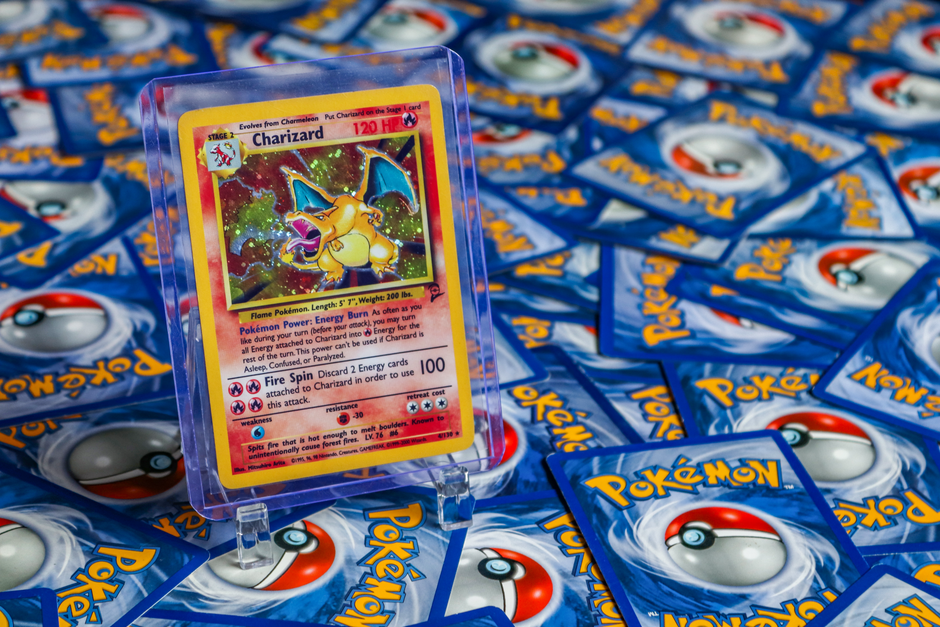
The valuable baseball cards from the 90s are usually scarce variations, inserts, or exceptionally high-grade examples—not ordinary base cards just because they feature a star. Start with the named rookies and inserts below, then verify the exact card, variation, grade, and recent sold prices. PSA’s records show why: the 1990 Leaf Frank Thomas has thousands of graded copies, while prices for the same card differ sharply by grade.
Are any baseball cards from the 90's worth anything?
Yes, some baseball cards from the 90s are valuable, but the strongest candidates tend to be scarce versions or cards in top condition rather than routine base issues. The decade’s large production runs make the exact variation and grade crucial.
Use this shortlist as a starting point, not a price ranking. It covers the requested standouts; the research supplied does not provide current sold values for every card listed, so check each one against matching recent sales before assigning a price.
- 1990 Leaf #300 Frank Thomas: A key rookie, but not automatically rare. PSA reports a population of 23,846 graded copies, including 4,767 PSA 10s.
- 1990 Score #697 Bo Jackson: A notable card to identify and compare by exact set and condition.
- 1990 Topps #414 Frank Thomas: Separate the ordinary card from the no-name-on-front error and Tiffany version.
- 1990 Topps #USA1 George Bush: A named set checklist candidate; confirm the issue and recent sales.
- 1991 Topps #333 Chipper Jones: A recognized rookie to check for condition and sold comparables.
- 1991 Upper Deck #SP1 Michael Jordan: Identify the card number and issue precisely before comparing prices.
- 1991 Upper Deck #SP2 Ryan/Henderson: Compare like-for-like examples rather than a different Upper Deck card.
- 1992 Bowman #302 Mariano Rivera: Check the exact card and grade; do not infer scarcity from the player alone.
- 1992 Donruss Elite Cal Ripken Jr.: Treat the insert as a specific issue and match the exact version when researching.
- 1992 Fleer #712 Frank Thomas: Another card to evaluate by exact issue, condition, and recent sold evidence.
PSA’s CardFacts page lists the 1990 Leaf Thomas at $250 for a most recent PSA 10 price and $35 for PSA 9. Those are displayed price points, not a promise of what any ungraded copy will sell for. The same page’s population figures make the practical lesson clear: a desirable player does not make a widely graded card scarce.
What baseball cards should I look for in the 1990 Topps set?
In the 1990 Topps set, look closely at Frank Thomas #414 and distinguish the standard card from Tiffany and no-name-on-front variations. The distinction matters more than simply finding Thomas’s name on the front.
PSA’s Frank Thomas collecting guide reports a claimed 15,000-copy print run for Topps Tiffany #414 and at least 200 known examples of the no-name-on-front error at the time of that article. Those are historical figures, not current population counts. PSA also says an authentic error is missing additional black ink, including much of the Topps logo; a missing name by itself is not enough to authenticate it. Counterfeits exist.
For the standard card, compare the corners, edges, centering, and surface before assuming grading will add value. The ordinary Thomas rookies are readily available in high grade compared with Tiffany and error versions, according to PSA’s guide. A strong player name is only one part of the value case.
Which 1990 Classic baseball card is the most valuable?
Among the supplied 1990 Classic evidence, PSA’s record for Bo Jackson #T25, Classic Series II, shows the strongest displayed result for a graded copy: a PSA 10 most recent sale of $269 on January 3, 2025. The record also shows a PSA 9 sale at $24.99 on March 13, 2025, so grade changes the comparison substantially.
Do not treat that $269 as a typical card value. PSA’s page records 17 auction sales totaling $513.11 in its displayed data, and PSA 10 results varied, including $88 in 2021 and $269 in 2025. Check several recent sales matching card and grade. PSA advises confirming its data against the original sale catalog before using it to make a buying or selling decision.
What are the top 20 most valuable baseball cards from the 1980s and 90s?
A reliable top 20 ranking cannot be established from the available research because it provides verified price data for only a few specific cards, not twenty comparable cards across both decades. A confident numbered ranking would imply price evidence that is not available here.
Instead, use the ten-card shortlist above as a research queue, then add verified scarce parallels and inserts only after identifying the exact issue. For the 1980s, the supplied source supports a broad caution, not a card-by-card ranking: Heritage Auctions says cards produced from 1980 onward were generally overproduced, while noting that some modern cards are valuable. That makes documented scarcity, condition, and actual sales more useful than decade labels.
A quick identification checklist
- Base card: Record the year, manufacturer, set, and card number. Compare it with the standard issue before calling it a variation.
- Refractor or parallel: Confirm the specific parallel name and set documentation. A shiny appearance alone does not prove scarcity.
- Numbered card: Check whether the card itself carries a serial number and record the exact denominator.
- Desert Shield: PSA describes 1991 Desert Shield as a parallel to the 792-card Topps set, distributed to U.S. troops in special packs during the Gulf War. Look for the gold-foil Desert Shield stamp, but be aware that counterfeits exist and scans can mislead.
- Short print or error: Match the exact variation to a trusted reference. For the Thomas no-name error, PSA warns that authentic examples are missing more black ink than the player’s name.
PSA’s Desert Shield guide reports an interviewee’s estimate of roughly 6,500 sets produced and notes that 112 of the 792 cards had never received a PSA 10 in the population discussed. These are figures from that guide, not a guarantee that any particular card is rare or valuable today.
Check value and grading break-even
Use sold listings, not optimistic active asking prices. Heritage recommends researching auction prices realized and cautions that older printed reference prices can become inaccurate; high-grade values can also sit far above lower-grade or damaged copies. Match the year, set, card number, variation, and grade, then compare multiple recent sales. If sales are sparse, say so in your estimate rather than letting one headline result set the expectation.
| Break-even input | What to enter |
|---|---|
| Raw sale estimate | Recent sold price for the same ungraded card in comparable condition |
| Grading fee | Applicable per-card service level; PSA lists displayed tiers of $39.99, $59.99, and $79.99 |
| Other costs | Shipping, insurance, and any other submission costs |
| Likely graded sale | Recent sales for the exact card and likely grade, not a best-case record |
| Decision | Graded sale estimate minus grading and other costs, compared with raw sale estimate |
PSA describes grading as evaluating quality and condition on a 10-point scale after authentication. Its displayed fees do not include every cost, and service levels and fees can change. For a simple example using the supplied Thomas figures, a PSA 10’s displayed $250 price is $215 above the $35 PSA 9 price before fees; that gap is not guaranteed profit, because the card must actually earn the grade and sell at a comparable price. This week, write down the exact card, three matching sold results if available, your likely grade, and every submission cost before deciding to send it in.
Frequently Asked Questions
How can I tell whether a 1990s baseball card is a rare insert or just a common base card?
Identify the year, manufacturer, card number, and any variation or insert designation, then compare the card with reliable set references. A shiny surface alone does not establish scarcity; look for documented numbering, a distinct parallel, or verifiable identifying details.
Are 1990s baseball cards worth grading, and how much does condition change the price?
Grading can make sense when a card is scarce or its likely high-grade premium exceeds all costs. PSA lists service levels at $39.99, $59.99, and $79.99 per card, before shipping and other costs, and its Frank Thomas data shows a PSA 10 at $250 versus $35 for a PSA 9.
Where can I check what a 1990s baseball card actually sold for?
Use auction archives and price records that show realized sales, such as PSA Auction Prices Realized, and compare multiple transactions for the exact card and grade. Confirm any surprising result in the original sale catalog because recorded data can contain errors.
Sources
Related reading
Which Valuable Sports Cards From the 80s and 90s Are Worth Money?
Valuable sports cards from the 80s and 90s are usually scarce variations, inserts, or high-grade stars; verify recent sales before pricing.

Can I Work Remotely for a Foreign Employer While Living in Finland?
A practical guide to permits, Finnish tax prepayments, social insurance, and employer duties for foreign remote work from Finland.

How Do I Find Construction Jobs That Will Train Me With No Experience?
Find paid entry-level construction training, verify real upfront requirements, and spot job listings that deserve a pass.

How Can I Find Long Distance Delivery Jobs With Your Own Car?
Compare long-distance delivery offers by total miles, time, vehicle costs, taxes, return options, and insurance before accepting.