
What Is the Best Hair Cut Style for Men?
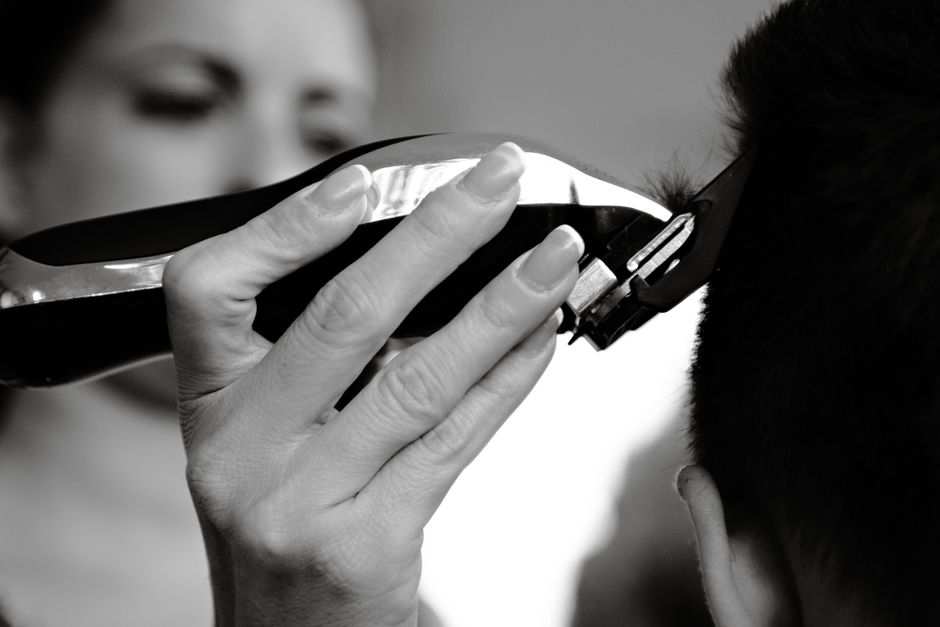
The best hair cut style for men matches four variables: face shape, hair texture, density, and hairline. Choose a crew cut, taper, or textured crop for controlled daily styling; a quiff or side-part when you have time to style; and a buzz cut when simplicity matters most. Tell your barber the desired top length, side length, fade height, texture, neckline, and how your hair grows.
What is the best hair cut style for men with my face shape?
The best cut for your face shape balances width and height rather than copying a style from a photograph. The Manchester Metropolitan University hairdressing guide advises avoiding extra width on round faces, limiting excessive height on oblong faces, and using fringe or controlled width to balance proportions.
Use this as a starting decision guide:
| Face-shape concern | Useful direction | Barber wording |
|---|---|---|
| Round appearance | Keep the sides controlled and avoid adding bulk at the widest point. | “Keep the sides close and blended. Leave enough length on top for a clean shape without making the sides look wider.” |
| Long or oblong appearance | Avoid excessive height; a fringe or modest top shape can create better balance. | “Do not build a tall quiff. Keep the top moderate and show me how a short textured fringe would sit.” |
| Face that needs more visual width | Use measured width at the sides or a fringe, depending on the hairline and texture. | “Keep some controlled fullness at the sides and soften the front rather than taking everything tight.” |
That table is a proportion guide, not a rigid rule. A fade, taper, crop, or quiff can all work when the barber adjusts the height and width. The mistake is choosing the label first and forcing your face and hair to fit it.
Before the cut, use a photo reference as a specification sheet. Bring an image with a similar hairline, texture, and density, then point out what matters: “I want this amount of length on top, this level of tightness at the sides, and this direction at the front.” A photo shows the destination; your hair determines the route.
Which men's haircut works best for thick, thin, straight, wavy, or curly hair?
The best men's haircut depends on both texture and density: texture describes whether hair is straight, wavy, or curly, while density describes how much hair is present in a given area. These are separate decisions, so “thick hair” and “curly hair” should not be treated as interchangeable instructions.
For dense or thick hair, a barber may need to remove weight or create a controlled shape so the sides do not become bulky. The Manchester Metropolitan University guide notes that abundant hair may need thinning to achieve the desired shape. Say: “Keep the outline clean, remove excess bulk where it expands, and leave enough weight on top to avoid a hollow-looking finish.”
For fine or sparse hair, preserve the appearance of thickness instead of automatically choosing the shortest possible cut. The same guide recommends caution with clipper cuts and very short cuts for fine hair and advises preserving thickness for sparse hair. A short textured crop, tidy crew cut, or carefully shaped side-part can be more useful than a high-contrast cut that exposes too much scalp.
Straight hair usually makes direction and separation visible, so the top length and parting need to be deliberate. Wavy hair can supply natural movement for a crop, side-part, or medium-length style, but the barber needs to know whether you want that movement defined or reduced. Curly or tightly textured hair requires a consultation about shrinkage, moisture, and how the curl pattern behaves at the intended length.
Research published in the Journal of the American Academy of Dermatology included 198 adult salon clients and examined hair-pull-test interpretation across Afro-textured and Asian-textured hair. The study describes Asian-textured hair as having the greatest tensile strength and Afro-textured hair as drier and more susceptible to damage and breakage. The practical takeaway is simple: the barber should adjust handling and finishing to the hair type instead of applying identical pressure, brushing, or heat to everyone.
The American Academy of Dermatology Association also advises that wet hair breaks more easily when combed or brushed, although people with tightly curled or textured hair should generally brush it when wet to reduce breakage. Excessive heat can damage every hair type. Ask for a routine that matches your texture: “Show me the lowest-effort way to finish this without aggressive brushing or unnecessary heat.”
Should I get a fade, taper, crew cut, buzz cut, or textured crop?
Choose a fade or taper for controlled sides, a crew cut or buzz cut for low daily styling, a textured crop for a short front with deliberate movement, and a quiff or side-part when you accept more styling work. The right choice is the one whose maintenance cost matches your schedule and hair behavior.
| Style | Best use case | What to ask for |
|---|---|---|
| Fade | You want the sides to transition visibly from very short into longer hair. | “Use a low, medium, or high fade; keep the top at this length and do not remove more bulk than necessary.” |
| Taper | You want a cleaner outline around the sideburns and neckline with a less dramatic transition. | “Give me a gradual taper at the sideburns and neckline, with a natural blend into the sides.” |
| Crew cut | You want a short, structured top with limited daily styling. | “Keep the top short but long enough to sit neatly; taper the sides and show me the profile before finishing.” |
| Buzz cut | You want the simplest possible length pattern. | “Use the guard number we agree on throughout, and check how the hairline and crown look before outlining.” |
| Textured crop | You want a short style with a forward fringe or separated top. | “Keep the top textured, use a controlled fringe, and avoid making the sides look wider.” |
| Quiff or side-part | You are willing to spend more time directing the top. | “Leave enough top length for the direction I want, preserve the natural part, and keep the sides proportional.” |
| Medium or longer style | Your density and texture can support length and you accept more maintenance. | “Keep the length around the areas that need coverage, remove only unwanted weight, and explain the daily styling routine.” |
Fade height is a high-impact decision. A low fade leaves more visual weight higher on the sides; a high fade removes more of that side area. If your face is round, ask the barber to avoid unnecessary side bulk. If your face is long, ask for restraint on top rather than automatically adding height.
Guard numbers are another precision tool. Instead of saying “short on the sides,” ask which guard number the barber recommends for your density and desired contrast, then confirm whether that number will be used consistently or blended into longer sections. This prevents a vague instruction from becoming an unexpectedly severe cut.
Hairline and growth pattern can override the style name. The Manchester Metropolitan University guide identifies side-swept fringe as a possible fit for a cowlick, directs widow’s peaks to one side or straight back, and suggests either maintaining length around a double crown or keeping the crown very short. Use the sentence: “Work with the growth pattern at the crown and hairline; do not force it into a direction it will not hold.”
If the hairline is changing, treat the cut as a comfort and communication decision, not only a styling decision. Cleveland Clinic describes male pattern hair loss as gradual miniaturization that commonly affects the midfrontal, temporal, and vertex regions. The American Academy of Dermatology Association warns that repeated tension can cause traction alopecia and lists pain, stinging, crusts, scalp tenting, broken hairs around the forehead, recession, and localized patches as warning signs. If a style hurts, loosen or change it and seek a board-certified dermatologist when hair loss appears.
What men's haircut is easiest to style and maintain?
The easiest men's haircut to style is usually a short, proportionate cut that follows your natural growth pattern and does not require daily heat, repeated brushing, or precise reshaping. A buzz cut generally minimizes styling steps, while a crew cut, taper, or short crop preserves more visual structure without demanding a tall finished shape.
Use a three-part maintenance test before choosing:
- Morning time: Tell the barber how many minutes you realistically have. A quiff needs more direction and control than a buzz cut or short crew cut.
- Product tolerance: If you dislike product, ask for a shape that works with natural texture rather than one that depends on hold.
- Outline tolerance: Decide whether you want a sharp, freshly outlined appearance or a softer grow-out. A dramatic fade or crisp neckline makes regrowth more noticeable.
Then ask for an operational explanation: “Show me how to style this on an ordinary workday, using the fewest steps.” The answer should cover drying direction, product amount, and what to do when the hair is not cooperating. If the routine sounds more complicated than your schedule allows, change the cut before the barber starts.
Keep the consultation focused with this complete script: “I need a professional cut that takes very little time each morning. My hair is [straight, wavy, or curly], my density is [sparse, medium, or dense], and my hairline or crown grows [describe the pattern]. Keep the top at approximately this length, use a [low, medium, or high] fade or taper on the sides, choose the guard number that preserves the shape, add texture only where it helps, and leave the neckline and sideburns [natural or defined]. Please explain the simplest way to style it.”
Finish by asking for a second look from the front, side, and back. A clear consultation reduces re-explaining, and the barber can adjust the cut before the final outline makes the change harder.
Frequently Asked Questions
How do I know whether a haircut will work with my hairline or cowlick?
Ask your barber to assess the hairline, crown, and growth direction before cutting. A cowlick may work better with a side-swept fringe, while a widow’s peak can be directed to one side or straight back; a haircut should work with the pattern rather than force it flat.
What should I tell my barber if I do not know the name of the haircut?
Describe the result instead of guessing the label: give the top length, side length or guard number, fade height, texture, neckline, sideburn treatment, and styling time available. Bring a clear photo that shows the front, side, and back, then ask what adjustment suits your hair.
How often will I need trims for different men's haircut styles?
The required schedule depends on how quickly the shape loses its intended outline and how much regrowth you accept. Short fades and sharply outlined styles usually need more frequent barber visits than longer, blended, or deliberately relaxed styles, so ask your barber how long the shape should remain controlled.
Sources
- American Academy of Dermatology Association: Hairstyles That Pull Can Lead to Hair Loss
- American Academy of Dermatology Association: Hair Care and Styling
- Journal of the American Academy of Dermatology: Hair-Pull Testing Across Hair Textures
- Cleveland Clinic: Male and Female Pattern Hair Loss
- Manchester Metropolitan University: Hairdressing Training Guide
Related reading
How Do I Choose Hairstyles for Short Hair?
Choose hairstyles for short hair by matching length, texture, face shape, occasion, and styling time.

Why Am I Suddenly Shedding So Much Hair?
Learn how delayed shedding may fit telogen effluvium, when to seek evaluation, and what recovery can look like after childbirth, illness, stress, or weight loss

Can Breast Implants Cause Fatigue, Joint Pain, or Brain Fog?
What research says about symptoms linked to breast implants, how clinicians evaluate them, and how to weigh monitoring against removal.
How to Check a Vintage Perfume Listing Before You Buy
Check seller history, bottle details, batch information, product history, and buyer protections before paying collector prices for vintage perfume.