
What Everyday Dresses Are Comfortable for Older Women?
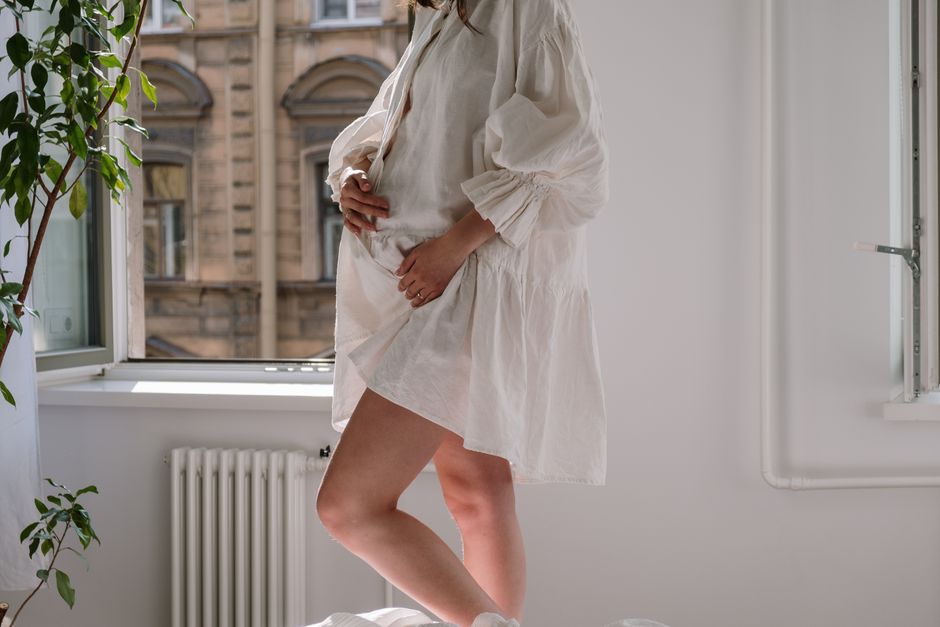
Choose a lightweight, breathable dress with stretch, a non-clinging shape, reachable closures, roomy sleeves, useful pockets, and a hem that stays clear of your feet. The strongest all-day choice is not one fabric or silhouette. It is a dress that lets you sit, walk, cool down, and use the bathroom without pulling, twisting, or asking too much of your shoulders and hands.
Comfort is a chain. A soft fabric cannot rescue a back zipper you cannot reach. A pretty shape cannot rescue a hem that catches underfoot. Start with movement, then choose the finish that makes the dress feel polished.
What dress fabrics are comfortable when I get hot easily?
Choose lightweight fabric with breathability, moisture handling, and enough stretch for movement, then judge the actual knit or weave rather than the fiber name alone.
A 2024 survey of 408 adults over 65 found that stretchiness ranked first among preferred fabric features for movement and thermal comfort at 29.7%, followed by wicking at 22.5% and breathability at 21.6%. Lightweight construction was the most desired clothing detail at 36.0%. That order gives a useful shopping rule: touch the fabric, move it, and hold it to the light before treating a label such as cotton or linen as an answer.
Cotton jersey is often a sound starting point when the knit is light and the dress has recovery. It bends with the body when you sit. A thin jersey can also show every line, so look for a cut that falls away from the stomach rather than relying on fabric alone.
Linen blends suit people who want a less clingy, more structured surface. The blend matters. A dress with a small amount of stretch fiber can make reaching, sitting, and bathroom breaks less of a struggle than a rigid woven dress. Rayon and other soft drapey fabrics can hang well, though the garment still needs enough room at the shoulders, waist, and hips.
Stretch knits work best when they recover after movement. A dress that stays stretched out at the seat or neckline creates a different kind of discomfort by midday.
Research from the North Carolina State University Journal of Textile and Apparel, Technology and Management found that fiber content is only part of the comfort story. Construction, yarn, finishes, surface feel, and moisture behavior all matter. A separate Eastern Michigan University study reached the same practical conclusion: structure, thickness, and fiber type matter as much as a fabric technology claim. A thin, unlined dress with a smooth knit or airy weave often tells you more than a promising fiber label.
| Dress feature | What to check in the fitting room | What it solves |
|---|---|---|
| Lightweight fabric | Hold it up and check for a heavy lining or stiff inner layer. | Less thermal load. |
| Stretch with recovery | Sit, stand, and reach, then see whether the fabric returns to shape. | Ease through sitting and walking. |
| Breathable sleeves | Raise both arms and notice whether the armhole binds. | Airflow and easier shoulder movement. |
| Simple opening | Practice taking the dress on and off without help. | Less struggle during dressing and bathroom breaks. |
Fabric names are clues. Construction is the proof.
What dresses are easiest to put on if I have limited shoulder mobility?
Dresses with front or side openings, roomy sleeves, and a relaxed upper body are easiest to put on when shoulder movement is limited.
A review in Frontiers in Pain Research identifies limited range of motion, joint pain, poor fit, swelling, and sensory sensitivity as clothing barriers. It also states that narrow silhouettes can be hard to put on with reduced shoulder range of motion. The answer is not an oversized sack. It is a dress with room placed where the body needs it.
Start at the opening. A pull-on dress can be simple when its neck opening has enough give and the fabric does not force a hard overhead reach. A front zipper, front buttons, or hook-and-loop fastening keeps the work in front of the body. In the 2024 survey, zippers were the most preferred closure type at 30.4%, followed by hook-and-loop closures at 25.5%.
Back zippers place the hardest task where the hands see least and reach least. Avoid them if fastening behind the body already hurts or strains. The Arthritis Foundation notes that zipper pulls and buttoning aids can help with fastening and names hook-and-loop fasteners as an alternative. A tool can help. A better closure removes the task.
Sleeves deserve the same scrutiny. The Frontiers review says appropriately sized sleeves can increase airflow and reduce thermal load. Look for a dropped shoulder, cap sleeve with a generous armhole, elbow-length sleeve, or a sleeve cut with room to lift your arms. Reject armholes that pinch when you reach for a shelf or pull the dress back down after sitting.
For an office, travel day, or family event, use a plain formula: a relaxed dress, stable shoes, and one structured layer you can remove. The same low-friction thinking helps when building a wardrobe for a new role; see How Can I Change Careers Without Taking On Unnecessary Debt? for the wider budget question. The dress should do its job before accessories are asked to do theirs.
Which dress styles do not cling to my stomach when I sit down?
A-line, shift, empire, and softly gathered dresses resist stomach cling when they have ease through the waist and hips, a fabric that falls rather than grips, and no tight seam across the fullest point of the abdomen.
Sitting changes the test. A dress that looks smooth while standing can pull across the stomach, ride up at the thigh, or gape at the buttons once you sit. Try the chair test before buying: sit fully back, cross and uncross your legs, stand, take several steps, and reach both arms forward. The dress should return to place without a long series of tugs.
An A-line shape gives room below the bust or waist. A shift dress gives a straighter fall from shoulder to hem. A soft empire seam can work when it sits comfortably and does not cut into the rib area. A wrap-style dress can offer adjustment, yet it needs enough overlap to stay secure when seated. The sources do not establish one best silhouette for every body. Fit decides the outcome.
Look at the waistband. A wide elastic waist covered by fabric can provide ease without the visual effect of a sportswear waistband. A fixed waist can look sharper, though it needs enough room for sitting. The 2024 clothing survey ranked size adjustability second among desired details at 22.3%, which supports choosing ties, elastic, or other adjustment where fit changes through the day.
Use pockets with care. Side-seam pockets that lie flat preserve a clean line better than bulky patch pockets over the hip. Put your phone or keys in the pocket during the fitting-room test. If the dress twists, pulls, or bulges, the pocket is not serving its purpose.
Frequently Asked Questions
Are pull-on dresses easier than dresses with buttons or back zippers?
Pull-on dresses remove the need to grip small buttons or reach behind your back, provided the neck opening and fabric have enough stretch. Research on chronic pain notes that buttons and zippers can be difficult for people with joint pain, while the Arthritis Foundation identifies zipper pulls, buttoning aids, and hook-and-loop fasteners as options for dressing. A front zipper or simple front closure can also work well when it stays within easy reach.
How can I find a dress with pockets that still looks polished?
Look for pockets set into side seams or placed flat at the front, then check that the pocket opening lies smooth when you stand and sit. Pockets are not a casual-only detail: older adults in a 2024 clothing survey specifically suggested them as a useful feature. The best test is practical: place your usual small item in the pocket, sit down, and see whether the dress still hangs cleanly.
What length dress is safest and most comfortable for walking?
There is no source-backed universal hem measurement. Choose a hem that remains clear of your feet through a normal stride and does not catch on stable shoes. CDC guidance focuses on properly fitted footwear with low heels, traction, and strong arch and heel support; the dress should leave that stable walking setup unobstructed.
The CDC STEADI footwear guide identifies falls as the leading cause of injury for adults 65 and older. It advises properly fitted shoes indoors and outdoors, with low heels, traction, and strong arch and heel support. It does not prescribe a dress length. That gap matters: use your normal shoes and normal stride as the test, not a number on a size chart.
The good dress is quiet. It does not demand a hand at the neckline, a tug at the hem, or a second thought before you sit down.
Sources
- PLOS ONE: Movement-assistive clothing preferences survey
- Frontiers in Pain Research: Clothing and chronic pain review
- North Carolina State University Journal of Textile and Apparel, Technology and Management
- Arthritis Foundation: Self-help arthritis devices
- CDC STEADI: Feet and Footwear Guide
- Eastern Michigan University: Comfort fabric thermal and moisture research