
Smart Ring or Band? Trust the Trends, Check the Cost
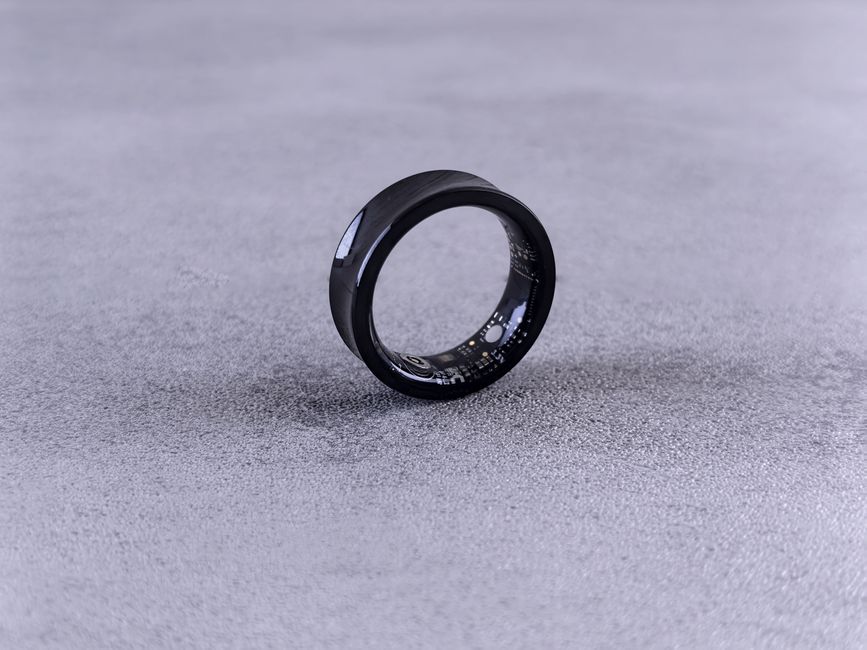
Treat a smart ring or band as a tool for tracking patterns, not a medical test. Sleep detection can be strong while sleep-stage estimates are less reliable, and heart-rate accuracy varies by activity and metric. Before buying, check what the device measures, whether those measurements were validated against a clinical reference, how it fits and syncs, and which features disappear behind a subscription.
Can I trust a smart ring’s sleep-stage or readiness score?
You can use a sleep-stage or readiness score as an estimate, not as a definitive reading of what happened in your body. The distinction matters: detecting that you slept is easier than correctly labeling each stage.
In a one-night study of 35 healthy adults, Brigham and Women’s Hospital and Harvard Medical School researchers compared the Oura Ring Gen3, Fitbit Sense 2, and Apple Watch Series 8 with polysomnography, or PSG. All three devices detected sleep with at least 95% sensitivity. Sensitivity for individual sleep stages ranged from 50% to 86%; Oura’s stage sensitivities ranged from 76.0% to 79.5%. The Sensors study also cautions that quiet wakefulness can be mistaken for sleep and that results may not generalize beyond the tested models and healthy participants.
That gives a practical reading rule. A device can be useful for noticing that your sleep schedule shifts, while its stage-by-stage labels remain uncertain. One night’s score is a weaker basis for a decision than a repeated pattern, and the study does not validate every ring, band, user, or night.
Readiness scores deserve the same restraint. They combine device measurements into a product-specific summary. The FDA’s general-wellness guidance distinguishes low-risk products encouraging wellness from products intended to diagnose, treat, monitor, or manage disease. A polished score does not by itself establish clinical validation.
Which health tracker works without a monthly subscription?
Oura Gen2 does not require membership; Gen3 and newer rings retain only limited features without an active membership. The supplied sources do not publish comparable subscription details for Fitbit Sense 2 or Apple Watch Series 8, so those costs should be checked with the seller before purchase.
Oura lists US membership at $5.99 per month or $69.99 per year, before applicable taxes, and includes one month for new members. For Gen3 and newer, membership provides detailed sleep analysis, 24/7 heart-rate tracking, and other features. Without it, users can see the Readiness, Activity, and Sleep daily scores, battery status, and limited app content.
The upfront price is only part of the comparison. The recurring fee buys access to detail, not just ownership of the ring. Compare the exact features you expect to use against the cost over the time you expect to keep the device. If detailed sleep analysis and continuous heart-rate tracking are central to your choice, a limited-membership experience changes the product’s value.
For the options named in the sleep study, the available research sources do not state retail prices or whether ongoing subscriptions are required. Use “not published” as the honest comparison rather than assuming the business model from the device category.
| Option | Who it suits | Cost information in sources | Key limitation |
|---|---|---|---|
| Oura Ring Gen2 | Someone seeking an Oura ring without membership | No membership required; device price not published | Device-specific measurement validation is not provided here |
| Oura Ring Gen3 and newer | Someone who wants detailed sleep analysis and 24/7 heart-rate tracking | $5.99/month or $69.99/year in the US, before taxes; one included month for new members | Without membership, access is limited to three daily scores, battery status, and limited app content |
| Fitbit Sense 2 | Someone comparing a tested wrist-worn option | Price and subscription terms not published | Sleep-stage sensitivity varies; the study cautions against generalizing beyond tested models and participants |
| Apple Watch Series 8 | Someone comparing a tested wrist-worn option | Price and subscription terms not published | Sleep-stage sensitivity varies; the study cautions against generalizing beyond tested models and participants |
The Oura membership details are the clearest published cost comparison among the sources here. For other options, confirm current device and service costs before treating them as subscription-free.
Why does my wearable say I slept when I was awake?
A wearable can label quiet wakefulness as sleep because its sleep detection is an estimate, not a direct reading of consciousness. The sleep study specifically warns that quiet wakefulness can be mistaken for sleep.
Fit and movement also shape the signal. Optical heart-rate sensors read through the skin, and motion artifacts or environmental noise can affect photoplethysmography. In a study comparing overnight Oura heart rate and heart-rate variability with chest ECG in 35 participants, nightly average heart rate and RMSSD had low mean bias and high correlation. Nightly averages generally had lower error than five-minute segments, while frequency-domain measures such as LF and LF:HF had higher error. The Journal of Medical Internet Research study therefore supports some overnight measures more strongly than others.
Wrist-based heart-rate accuracy also changes with activity. A systematic review and meta-analysis by Zhang and colleagues pooled 44 studies, 738 effect sizes, and 15 brands. Average differences from ECG or chest-strap criteria were small during sleep (-0.40 bpm), rest (-0.01 bpm), and treadmill activity (-0.51 bpm). They were larger during resistance training (-7.26 bpm) and cycling (-4.55 bpm). The review concluded that validity was acceptable for most common activities, with results differing by activity.
Small differences in fit, movement, and individual response can make two nights look unlike each other. Treat the reading as a signal to review alongside how you feel, not a verdict. If the result seems implausible, check that the device is worn as directed, that its app has synced, and whether the reading covers the same metric and time window you are comparing. The supplied studies do not quantify how much fit or syncing changes accuracy, so no precise correction can be given.
Frequently Asked Questions
Are smart-ring heart-rate and recovery readings accurate?
Some overnight measurements compare well with a clinical reference, but accuracy depends on the metric and how readings are averaged. A study of Oura found low mean bias and high correlation for nightly average heart rate and RMSSD against chest ECG; frequency-domain HRV measures had higher error. A readiness or recovery score is not itself a clinical diagnosis.
How can I tell whether a health gadget’s measurements are clinically validated?
Look for a study that names the exact device model, measurement, population, and reference method, such as polysomnography or ECG. Check whether the validation covers the activity and metric you care about, and whether the sample resembles you. FDA general-wellness guidance explains that products promoting healthy lifestyles can fall outside the device definition when unrelated to diagnosing or treating disease.
A useful tracker gives you a consistent record. A trustworthy buying decision also accounts for what the record can and cannot prove, and what it costs to keep seeing it.
Sources
Related reading
How Should Older Adults Compare Fiber, Cable, and 5G Home Internet?
Compare fiber, cable, and 5G home internet by address, full cost, performance, setup, and possible Lifeline savings.